
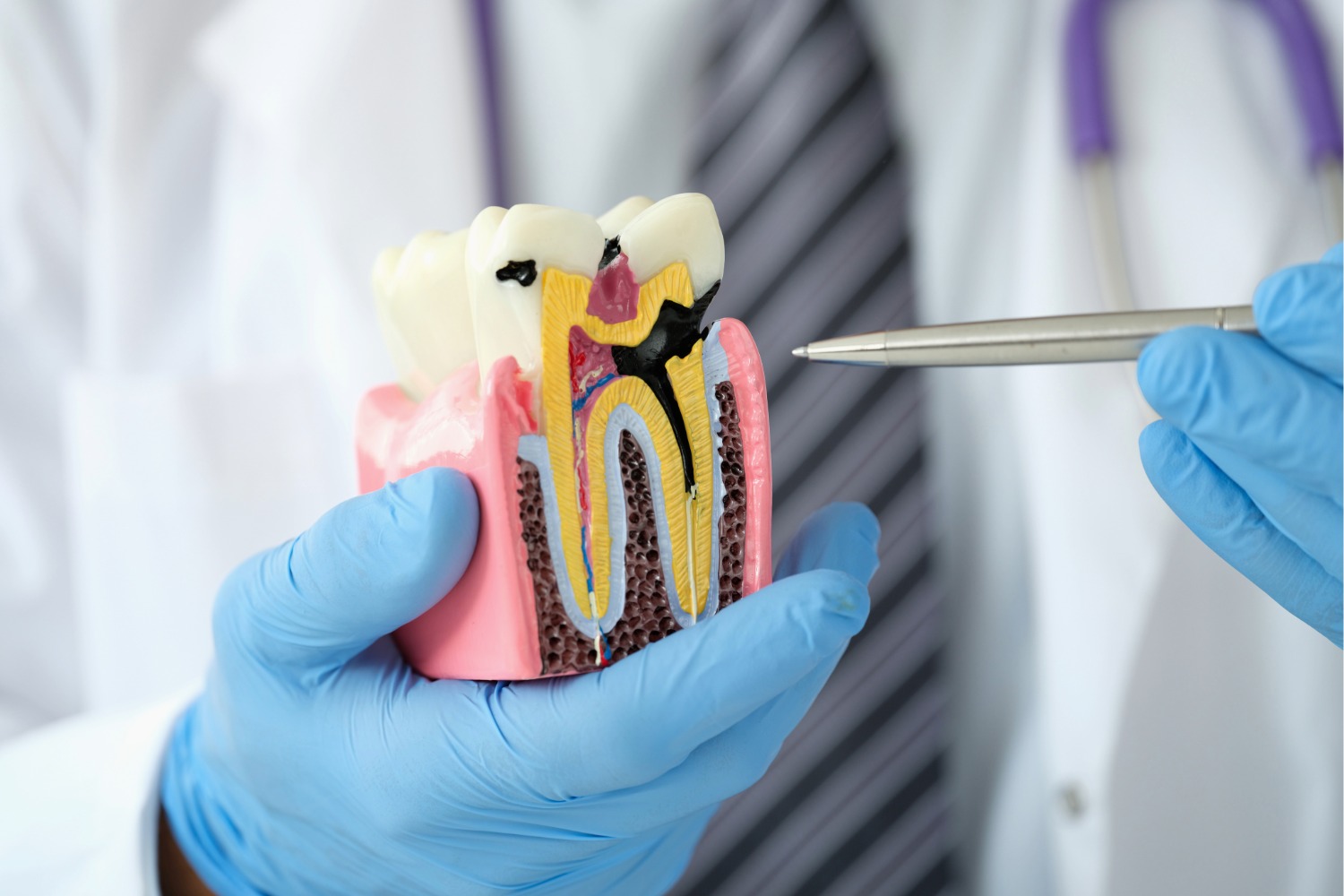
A cavity may seem like a trivial problem, especially when it does not cause pain. Many people tend to postpone visits to the dentist, convinced that the problem will remain limited to the tooth. In reality, a cavity can lead to serious problems if left untreated. untreated caries It can quickly turn into a very serious condition, capable of compromising not only oral health but also overall health.
In this article we explain what happens when a cavity is ignored, what are the symptoms that should not be ignored and when to immediately consult a dentist to avoid more serious complications.
What is a cavity and why does it form
Caries is a lesion of the hard tissues of the tooth caused by bacteria present in the dental plaque.
These bacteria feed on the sugars introduced into the diet and produce acids that over time erode the enamel and dentin.
Factors that increase the risk of tooth decay:
-
Insufficient oral hygiene
-
Diet rich in sugar
-
Frequent consumption of snacks and acidic drinks
-
genetic predisposition
-
Lack of periodic checks
If detected in time, tooth decay is easily and painlessly treated. The problem arises when the decay is not treated.
Untreated caries: the most common risks
One untreated caries It does not stop on its own. It progresses into the deeper layers of the tooth until it reaches the pulp, where nerves and blood vessels are located.
Here's what can happen when it is ignored:
Damage to the enamel
Caries extends beyond the surface layer of the tooth, weakening it and making it more susceptible.
Tooth enamel infection
The tooth starts to hurt when it comes into contact with hot, cold or sweet foods.
Pulpitis
The infection reaches the pulp, causing intense, throbbing, and continuous pain.
Abscess
The bacteria come out from the tip of the tooth and create a pus sac.
The face may swell, fever may appear, and chewing difficulties may occur.
Loss of a tooth
When the structure is too damaged, the tooth can no longer be repaired and must be extracted.
Propagation of the infection
In more severe cases, the bacteria can spread to the surrounding tissues and, rarely, cause systemic complications.
The good news is that intervening in time prevents almost all of these scenarios.
Are you considering dental care in Albania?
In this article you will find clear information. If you want a personalized assessment, our team is available.
Assistance in Italian - Clinic in Tirana - No commitment
Symptoms indicating worsening
A cavity can start without any pain, but there are signs that should not be ignored:
-
sensitivity to heat or cold
-
pain when chewing
-
persistent bad breath
-
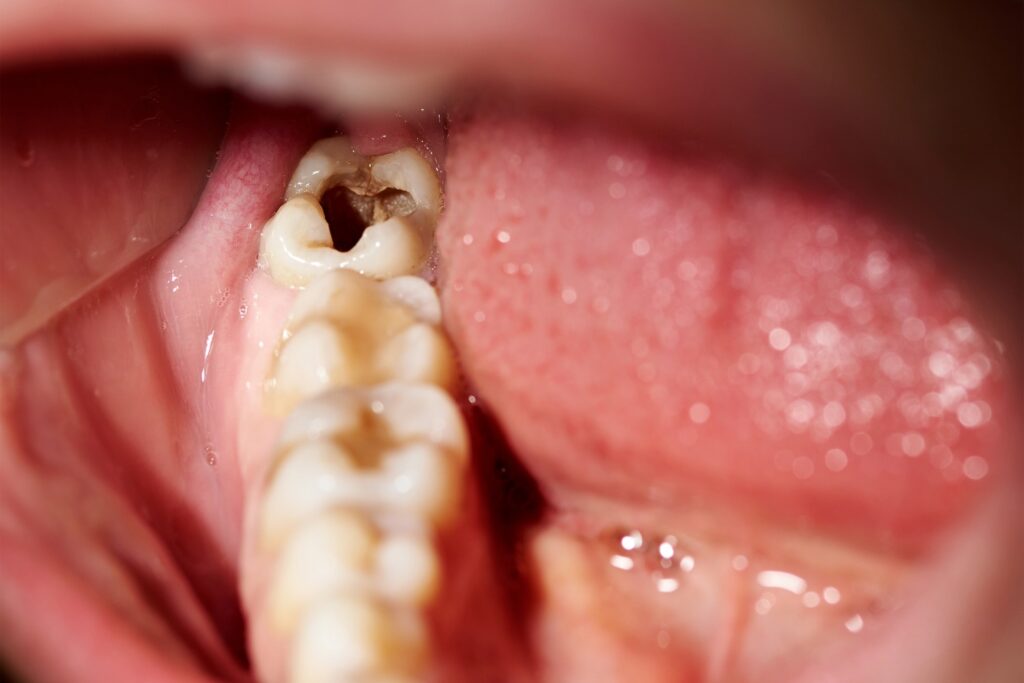
Dark spots or visible cavities on the tooth
-
spontaneous discomfort or night pain
-
swelling of the gum near the tooth
If one of these symptoms appears, the decay is already in an advanced stage.
How to treat a tooth decay in its different stages
The treatment depends on the stage of the decay:
Initial phase
A simple filling eliminates the lesion and restores the function of the tooth.
Advanced phase
If the decay is deep but the tooth is repairable, it can be restored with a more complex reconstruction or an inlay.
Pulpitis
A de-mineralization procedure is required: the tooth is cleaned of bacteria and sealed.
Abscess
The infection must be drained, the tooth must be demineralized, or if severely damaged, it must be extracted.
Loss of a tooth
If the decay has been ignored for too long, the only solution is extraction and then replacement with a dental implant.
When dental implants are needed
A neglected toothache for months or years can lead to the loss of the tooth.
In these cases, the most effective and lasting solution is dental implantation, which allows:
-
restore aesthetics and functionality
-
avoid moving the adjacent teeth
-
prevent chewing problems
-
maintaining the bone structure stable
Smile Provider offers certified dental implants with premium materials and customized solutions even in complex cases.
Conclusion: an untreated cavity can become a serious problem
One untreated caries It’s not just an inconvenience: it’s an injury that can quickly turn into a painful and dangerous infection.
Acting promptly allows us to save the tooth, avoid invasive treatments, and preserve the smile in the long term.


Request a free quote
Fill out the form: we will get back to you shortly with information and guidance on your case.
Contact us on WhatsApp